
Septic system service in Malden
What’s Covered on This Page
- Septic Tank Pumping in Malden
- Septic System Inspections in Malden
- Septic System Repairs
- Drain Field Services in Malden
- How often should I pump my septic tank in Malden?
- Do older homes in Maplewood need more frequent septic service?
- What happens during a septic tank pumping visit?
- What are the signs my septic system needs repair?
- What is a Title 5 inspection and when do I need one in Malden?
- Why do septic baffles fail so often in Malden systems?
Need septic system service?
Call Now for a Free Estimate. Call Water Heater Genies now.
Septic Tank Pumping in Malden
Living in Maplewood? Slow drains, gurgling pipes, or bad smells outside mean one thing: your septic tank needs pumping. Many folks around Maplewood go years without a cleanout. That’s a mistake. Solids and sludge pile up. Your tank can’t handle it anymore. Wastewater just sits there. Pumping is smart money, trust us. It saves you from sewage backing up, groundwater getting messy, and replacing your whole drain field later on. Those fixes cost a lot. Avoid them.
Most Malden homes have 1,000 to 1,500-gallon tanks. How often you pump depends. Your household size is key. Two people with a big tank? Maybe four or five years between service. But a family of four on a smaller tank? Every two or three years is more like it. Use a garbage disposal a lot? Or just use more water? Pump sooner. No magic number here. It’s all about your home’s actual use and tank size. We can help you figure it out.
In Maplewood, we see a lot of homes built before 1970. Many have single-compartment septic tanks. Newer tanks got two compartments. A better design,. Those older single tanks? Less baffling inside. Solids don’t settle as well. Everything moves faster to the drain field. They fill up quick. They need more service. Got a 1950s or ’60s Maplewood home with its original tank? Keep those cleanouts on schedule. Very important. We might suggest a two-compartment system. Or an effluent filter. But consistent pumping, that’s always a must.
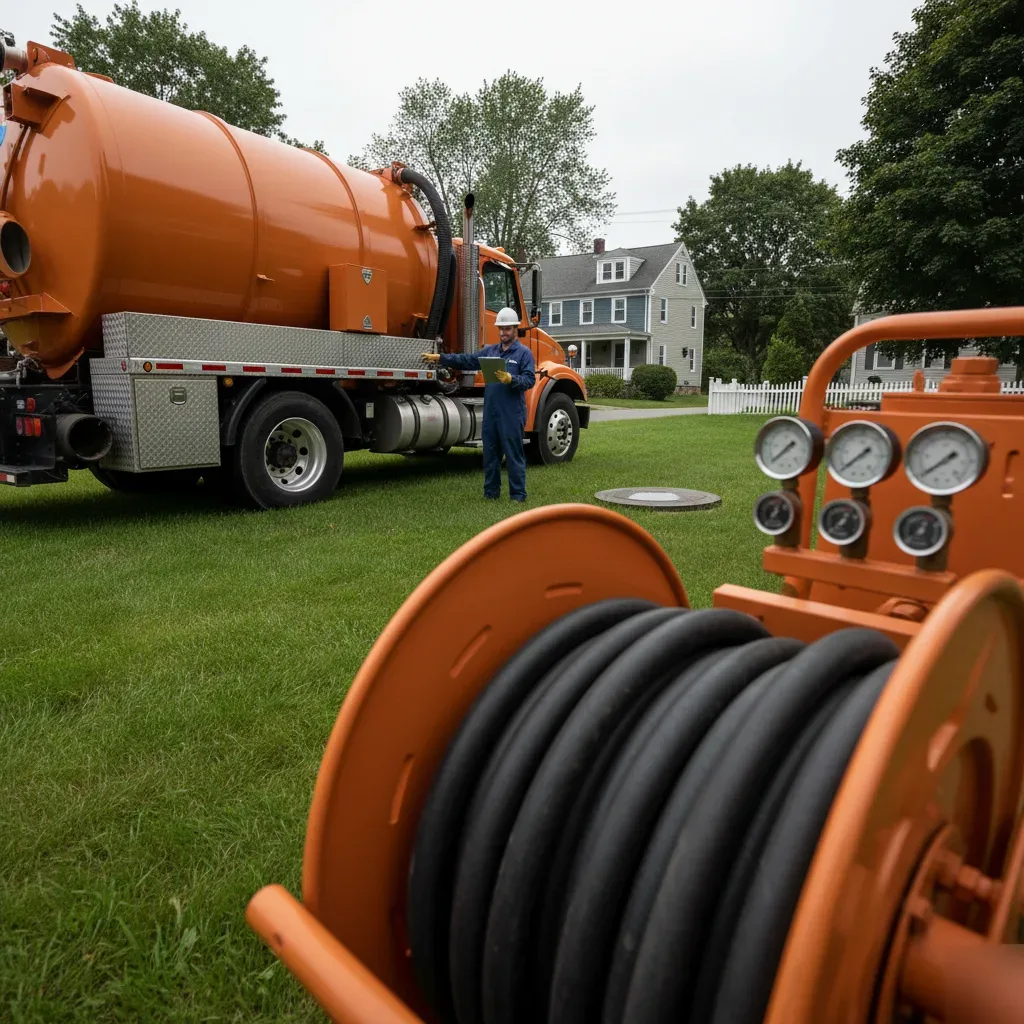
So, what happens when we come out? Our crew arrives. First, find the tank. On many older Maplewood properties, it’s not always obvious where the tank is buried. Our licensed technicians use probe rods, electronic locators, even your property’s city plans. We’ll find it. Then we dig up the access lid. Sometimes it’s just a few inches down. Other times, two feet. Then we open it for a look.
Lid’s off, we measure the scum. Then the sludge on the bottom. These numbers tell us a lot. They show how full things really are. Helps us figure out your best pumping schedule. Down goes the hose. Everything gets sucked out: solids, liquids, sludge. We clear it all. During this process, our trusted technicians also check inside the tank. Walls, baffles, pipes, the works. Looking for cracks, roots, worn-out parts, anything wrong with the structure. Find a problem? We’ll tell you straight. And what we think you should do about it.
People often forget about the tank lid itself. And risers. Older concrete lids, especially in Maplewood, they crack. Groundwater gets in, adds extra volume to your system. That’s not good. We check that lid every time. Lid buried deep? Get a riser. It brings the access right up to ground level, makes life easier. Future pumpings are quicker, your yard stays nicer, and you save money because we don’t have to dig. (That digging takes time, after all.)
Once we’re done, the lid goes back on. We backfill the dirt. You get a service report showing what we found, how much we took out, and when we think you should pump again. This paperwork is important. Both for you. And for future Massachusetts Title 5 inspections if you ever sell.
Don’t just wait. Sluggish drains? Smells outside? Or maybe it’s just been too long since your last service? Proactive tank pumping keeps your home safe and your family healthy. It goes back to saving you money, too. Ready to get on a regular schedule? Check out our Malden septic tank pumping page. Book your appointment.
Septic System Inspections in Malden
Looking at a home in Bell Rock? Your lender will want a septic inspection. We check everything: tanks, drain fields, baffles. We do it by Massachusetts Title 5 rules. You get the real story before you buy.
Inspections aren’t just for buying homes. A yearly check-up? It catches small issues. Before they flood your yard, that is. Especially after our tough Malden winters (frozen ground and snowmelt really test these old systems). A quick look saves big money later. Trust us. More details are on our septic system inspections page.
Septic System Repairs
Your septic acting up? Sewage backup, wet spots in the yard, pump alarm going off? You need a quick look and a real fix. Don’t wait on repairs. That never helps. A broken part just gets worse. It stresses out everything else. Malden homeowners who jump on problems fast usually save big. It beats a whole new system.

Our licensed technicians follow a clear process every time. We find and uncover the tank. Check baffles, both inlet and outlet. We look at the effluent filter. Inspect the distribution box for damage. And assess the drain field itself. Is it failing? We’ll know. Sometimes, we use cameras. No digging up your whole yard if we don’t have to. Found the problem? We’ll tell you straight. In plain words. No work starts until you get it.
In Malden, we replace a lot of baffles. Both inlet and outlet. They corrode or break right off the tank wall. Baffles guide the wastewater. Simple job, but. If the inlet baffle breaks, solids skip settling. They go straight for the outlet. This clogs your filter or floods the D-box. And a broken outlet baffle? Solids and scum get out. They hit the drain field. That can clog the soil permanently, and your whole field fails. That’s a huge problem. Catch a baffle early, save your whole system. For years.
Effluent filters need fixing too. Happens a lot. They sit right where water leaves the tank. They catch tiny solids. Keep them from reaching your drain field. A smart design, actually. Filters clog if you skip pumping. Or they just crack. Then they don’t work anymore. A bad filter can mean slow drains inside. Or smells near your tank. We carry replacement filters for most common tank configurations. Often fix it in one visit.
Cracked concrete lids? We see them constantly. Especially on systems from the 70s and 80s. Those hydrogen sulfide gases in the tank? They eat away at the concrete. Hairline cracks appear. Then they get bigger. A cracked lid is dangerous. And bad for the environment. Heavy rain? Groundwater can get right into the tank, overwhelm it. And raw sewage can leak out. Contaminates your soil. (Nobody wants that.) We repair minor cracks with special concrete stuff. But if it’s too broken, we replace the whole lid.
Forestdale properties in Malden? They have their own set of challenges. A lot of homes there used clay pipes back in the day. Clay was common, sure. But tree roots absolutely love it. Roots chase that moisture. They find tiny cracks or gaps. They get inside. Inside, they grow fast. Block everything up. Crush the pipes. We see this often. We’ve swapped out lots of original clay laterals in Forestdale. We use modern Schedule 40 PVC pipe now. Roots can’t get into it. It lasts way longer. Recurring backups in Forestdale? Bad clay pipe is probably the reason.
Fixing the D-box is big too. It takes the treated water from your tank. Then spreads it out evenly to your drain field lines. Or it’s supposed to. But if a D-box settles, shifts, or cracks, water doesn’t spread right. Some lines get flooded. Others get nothing. This mess saturates parts of your drain field. You see wet spots. Or super green grass patches in your yard. That’s a clear sign. Repairing or replacing a bad D-box gets things balanced. It can often save a struggling drain field.
Got a pump system? An alarm means trouble. That alarm usually means water in the pump chamber is too high. Could be a bad pump. Or a float switch is stuck. Maybe a tripped breaker. Or a blockage in the force main. (Lots of possibilities.) Our licensed technicians test each electrical and mechanical component. Finds the exact failure. We stock replacement pumps, float switches, and control panels. Get you back up fast.
Timing for septic repairs? It’s everything. A cracked baffle costs a few hundred now. Ignore it? You could be looking at tens of thousands for a new drain field later. That’s a real difference. If you’re noticing slow drains, gurgling pipes, sewage odors, standing water in the yard, or a recurring alarm, don’t wait. Every day a broken part keeps running, it wrecks something else. And you, you’ll feel it in your wallet— Schedule an inspection and get the problem resolved before it becomes a far more expensive emergency.
Need help with septic system service?
Call Now for a Free Estimate. Water Heater Genies is ready to help.
Drain Field Services in Malden
Soggy spots in your yard? Big red flag. We often see it in Edgeworth: saturated ground. It means your drain field is failing. And the longer you wait, the more your soil gets ruined. It’s tough to reverse that.
We check the whole leach area first. Compacted soil? Crushed pipes? We plan the whole fix. No digging starts until we have a clear map. Most Malden homes need a custom plan. Old lot layouts, different soils — it’s never one-size-fits-all here. Want to know your options? Our drain field services page has answers.
Frequently Asked Questions
Common questions about septic system service services in Malden
How often should I pump my septic tank in Malden?
Most Malden homes need pumping every two to five years. It depends on your tank size and how many people live there. A family of four with a smaller tank? Every two or three years. Two people with a big tank? Maybe four or five years. Use a garbage disposal often? Pump sooner. Your actual water use matters more than any fixed schedule.
Do older homes in Maplewood need more frequent septic service?
Yes, older Maplewood homes often need more frequent pumping. Many houses built before 1970 have single-compartment tanks. These older tanks don’t settle solids as well as newer two-compartment designs. Solids move faster toward your drain field. They fill up quicker. If your home is from the 1950s or ’60s with its original tank, stay on a regular pumping schedule.
What happens during a septic tank pumping visit?
We locate your tank first, then dig up the access lid. We measure the scum layer and sludge at the bottom. Then we pump everything out — solids, liquids, and sludge. While we’re in there, we check the walls, baffles, and pipes for damage. You get a written service report when we’re done. That report matters for future Massachusetts Title 5 inspections.
What are the signs my septic system needs repair?
Watch for sewage backup inside, wet spots in your yard, bad smells near the tank, or a pump alarm going off. These are signs something is wrong. Don’t wait. A broken part just puts more stress on the rest of your system. Malden homeowners who fix problems fast usually avoid much bigger costs down the road.
What is a Title 5 inspection and when do I need one in Malden?
A Title 5 inspection is required by Massachusetts law when you sell your home. If you’re buying in Bell Rock or anywhere in Malden, your lender will likely require one too. We inspect the tank, drain field, baffles, and all connected parts. You get a full report on the system’s condition before the sale closes. It protects you from surprise problems after you move in.
Why do septic baffles fail so often in Malden systems?
Baffles corrode or crack over time, especially in older Malden tanks. They guide wastewater through the tank in the right order. A broken inlet baffle sends solids straight to the outlet. A broken outlet baffle lets solids reach your drain field. That can permanently clog the soil. Catching a bad baffle early can save your entire drain field for years.
Ready to Get Started?
Call Now for a Free Estimate Call (781) 555-0193 today.