
tankless hot water heater install
What’s Covered on This Page
- Older Malden Homes Change What a Tankless Install Involves
- Condos and Multi-Unit Buildings Need a Different Venting Check
- What Drives Tankless Installation Cost
- A Power Outage Can Still Leave a Tankless System Without Hot Water
- When a Full Tankless Conversion Isn’t the Right Move
- Do plumbers or electricians install tankless water heaters?
- Why do some plumbers push back on tankless water heaters?
Older Malden Homes Change What a Tankless Install Involves
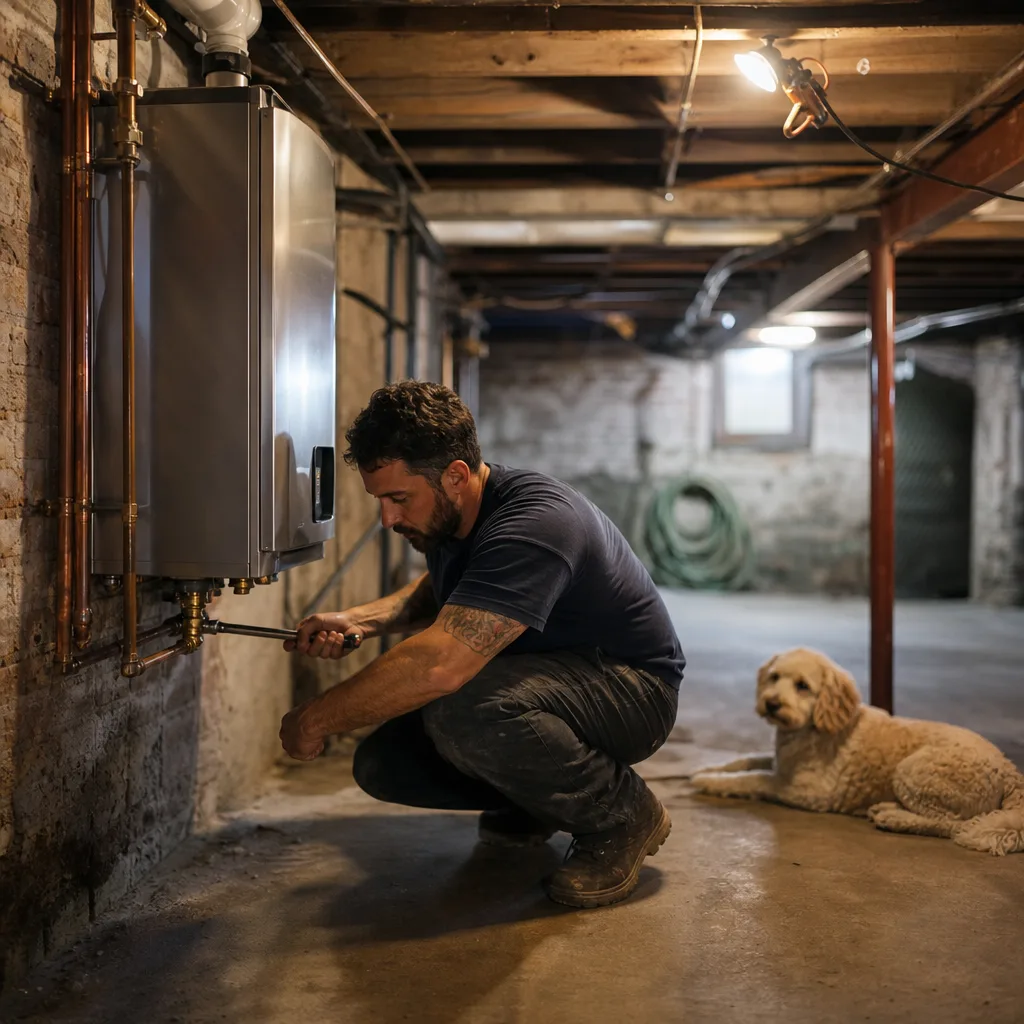
A lot of Malden’s housing is old. You’ve got two-families, triple-deckers, and single homes that were built long before anyone pictured a heater hanging on the wall. That doesn’t mean tankless won’t work in your house. It means the swap is rarely just pulling out the old tank and hanging a new box in its spot.
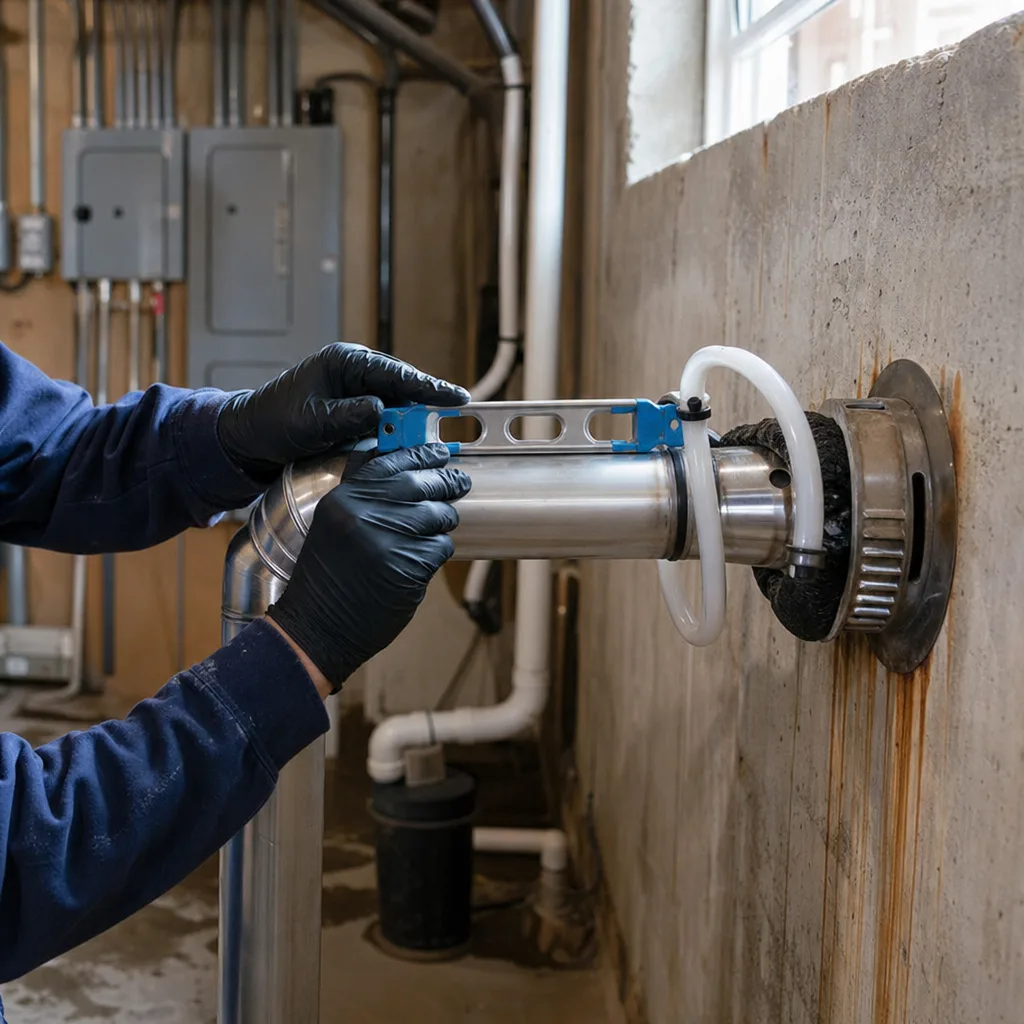
Here’s what usually changes when you go from a tank to tankless in an older building:
- Gas supply. A tankless unit burns a lot more gas at once than a tank does, because it heats water on demand. The skinny gas line that fed your old tank often can’t keep up, so it may need to be upsized. Sometimes the gas meter itself needs a look from the utility.
- Venting. Many older tank heaters vent up into a masonry chimney. Most tankless units can’t use that chimney. They need their own vent pipe run out through a wall or the roof, so where your heater sits in the basement matters.
- Electrical. Gas tankless units still need power for their controls and fan. If there’s no outlet near the old heater, one has to be added.
- Condensate. High-efficiency tankless units make acidic water as they run. That water needs a safe place to drain, and plenty of old basements don’t have a floor drain in the right spot.
- Old pipes and fittings. If you still have older piping or worn valves near the heater, it’s smart to deal with them during the install instead of tying a new unit into tired parts.
Winter matters too. Our busy season runs October through March, and that’s when this really shows up. The water coming into your house is much colder in January than in July. A tankless unit has to raise that cold water all the way to shower temperature as it flows through. So a unit that feels fine in summer can come up short in February if it was sized too small. Sizing for Malden winters, not the average day, is how you avoid a lukewarm shower when two taps run at once.
Multi-family buildings add one more question. In a two-family or triple-decker, each unit may have its own heater, its own gas meter, and its own vent route. Whether you’re putting in one tankless unit or three, each one needs its own plan. The same goes for older homes in Medford, Melrose, and Everett, where the building stock looks a lot like Malden’s.
None of this is a reason to skip tankless. It’s a reason to get a quote from someone who looks at your basement. A phone quote can’t tell you whether your gas line is big enough or where the vent can go. Our team holds MA Master Plumber License #14823, and we’re a Rinnai ACE Certified Installer, so we know what to check before we give you a number.
Condos and Multi-Unit Buildings Need a Different Venting Check
If you own a condo, the hardest part of going tankless usually isn’t the heater. It’s the hole in the wall. In most condos, you own the inside of your unit, while the outside walls, roof, and chimney belong to everyone. That means your tankless plan has to work for the building, not just your basement.
Start with your condo association. Many associations want a written request before anyone drills through an outside wall. Some limit where vents can go, like keeping them off the street side of the building. Others set rules about how the vent looks. Check your master deed and bylaws, or just ask the board, before you schedule anything. Getting approval first saves you from a unit that sits in its box for weeks.
Next is where the vent can end outside. Every tankless maker lists required distances from windows that open, doors, fresh air intakes, gas meters, walkways, and decks, and the local inspector checks them. In a single-family home you usually have room to work. In a Malden two-family or condo conversion, the side wall might face a neighbor’s bedroom window just a few feet away. A spot that looks fine from inside your basement can fail those rules once you walk outside and measure.
Shared chimneys are another thing people miss. In some older buildings, several units’ heaters or boilers vent into one chimney. When your old tank comes off that chimney, the chimney has less warm air moving through it. That can change how well it drafts for the neighbors’ appliances still using it. This needs checking before your tank goes out the door, because it affects more than your own unit.
Some condos have no easy outside wall at all. If your utility closet sits in the middle of the unit, the vent may need a longer run. Each tankless model has limits on how long its vent pipe can be and how many bends it can have. Go past those limits and the unit won’t run right. Sometimes the answer is a different model or a different spot for the heater, and sometimes tankless just isn’t the right fit for that unit.
Winter adds one more check. Low wall vents can get buried by snow or crusted with ice during a hard Malden, Medford, or Everett winter, and a blocked vent can shut the heater down on the coldest night. The vent should sit high enough to stay clear of drifts. On cold days tankless vents also put out a visible steam plume, so you don’t want it blowing onto a neighbor’s porch or a shared walkway.
Before you ask for a quote, it helps to have these ready:
- Your association’s rules on outside wall work, or a note from the board
- Whether your current heater vents into a chimney other units also use
- Which walls of your unit face outside, and what’s on the other side of them
- Who owns the space where your heater sits, you or the association
With those answers in hand, an in-person look can tell you quickly whether tankless will work in your unit and where the vent can go.
That same focus carries through the practical water heater genies guidance our team provides to local families.
What Drives Tankless Installation Cost
The heater is usually not the biggest variable in a tankless quote. The work around it is. Two homes on the same Malden street can get very different numbers for the same model, because one needs a new gas run and a long vent while the other is nearly ready to go. When you understand what’s behind the number, you can tell a fair quote from a lowball one.
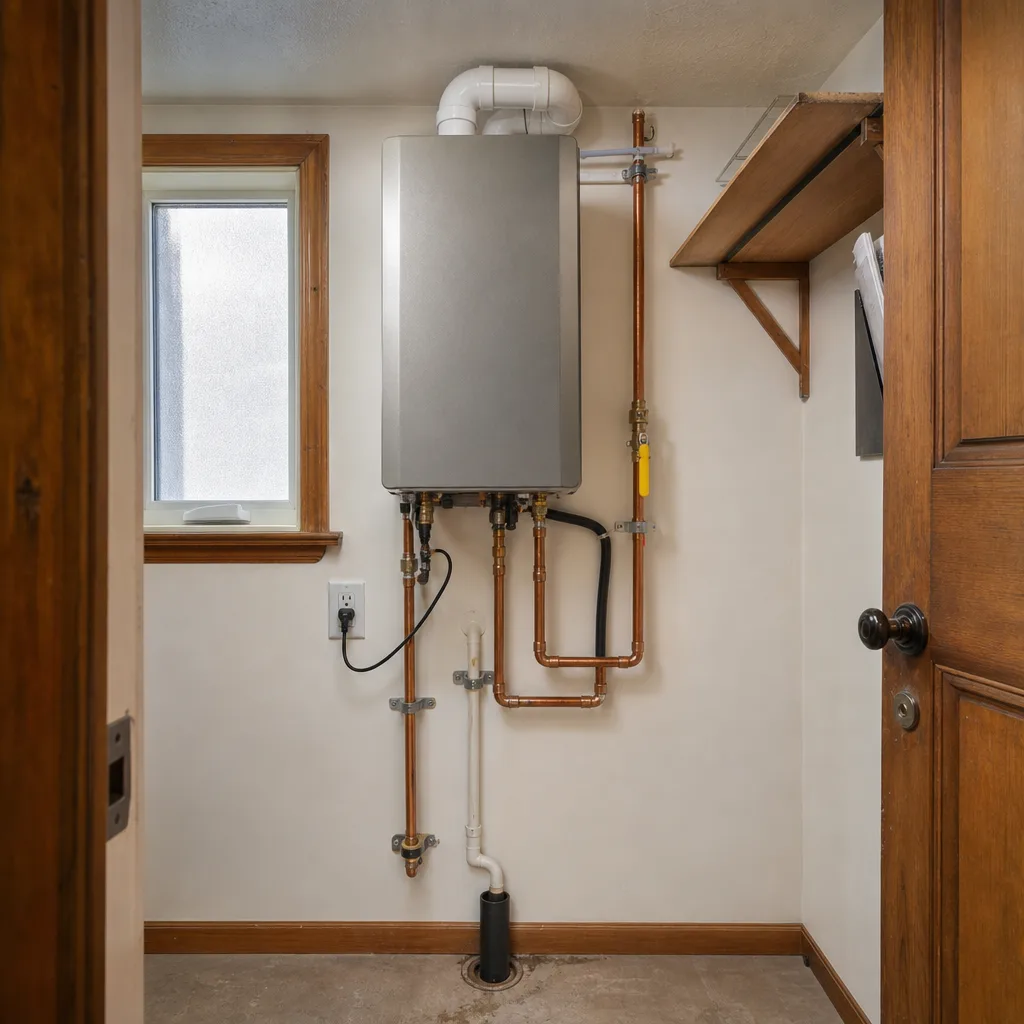
Here’s what moves the total up or down:
- Tank-to-tankless conversion vs. tankless replacement. Swapping an old tankless unit for a new one is often simpler, because the gas line, vent, and power are already in place. A first-time conversion carries the extra gas, venting, electrical, and condensate work covered above.
- Unit size. A bigger unit costs more up front. It also pulls more gas, so it can make a gas line upgrade more likely. Sizing for winter water temperatures is worth it, but oversizing past what your household uses just adds cost.
- Vent route. A short run straight out the nearest wall costs less than a long run with several bends up through a building. In condos and multi-family homes, where the vent can go often sets the price.
- Where the heater goes. Keeping it near the old tank’s spot keeps the water and gas connections short. Moving it across the basement, or out of a closet, adds pipe and labor.
- Permits and inspection. Gas and plumbing work on a water heater needs a permit and an inspection in Massachusetts towns like Malden, Medford, and Melrose. A proper quote includes that cost. If a quote leaves it out, ask why.
- Removing the old tank. Draining, disconnecting, and hauling away the old heater takes time. Some quotes include it, and some list it on its own line.
- Service valves. Tankless units need regular flushing to clear mineral buildup. Isolation valves installed at the start make that job easy later, and they’re cheap to add during the install and a hassle to add after.
Quotes also come in two styles. Some installers give one flat price for the whole job. Others list each part: the unit, labor, gas work, venting, permit, and disposal. Neither style is wrong. A flat price is easy to read. A line-item quote makes it easier to see what you’re paying for and to compare one company against another. If two quotes are far apart, the gap usually shows up in one of the items above.
Before you hire anyone, ask these questions:
- Did you check my gas line size and meter, or are you guessing?
- Where will the vent come out, and does that spot meet the clearance rules?
- Is the permit included, and who’s pulling it?
- Does the price include removing the old tank and adding service valves?
- What could change the price once the work starts?
That last question matters most. A quote from someone who never saw your basement can’t account for what’s behind the wall, so it’s more likely to grow once the job starts. Timing can help too. If your old tank is still working, getting quotes in spring or summer gives you room to compare without a cold-shower deadline. Once October hits and the busy season starts, many people are shopping because a heater already quit.
Have questions? We’re happy to help.
Call Now for a Free Estimate. Water Heater Genies is ready to help.
A Power Outage Can Still Leave a Tankless System Without Hot Water
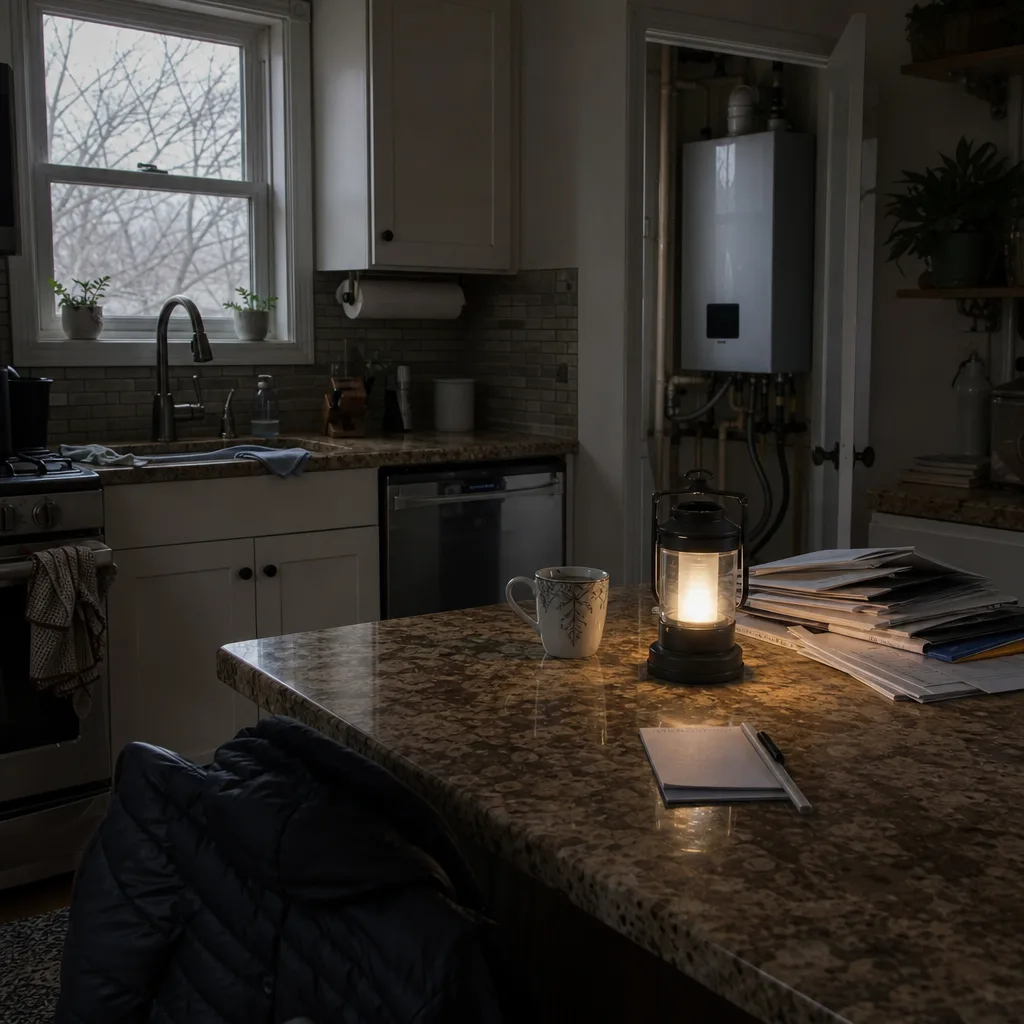
This one surprises a lot of people. A gas tankless heater burns gas, but it can’t run without electricity. The controls, the electronic igniter, and the fan that pushes exhaust out the vent all need power. When the lights go out, the heater stops, and so does your hot water.
Your old gas tank may have acted differently. Many older gas tanks use a standing pilot light and don’t need power at all, so they kept making hot water during a storm. Even an electric tank still holds a full tank of hot water that stays warm for hours after the power drops. A tankless unit doesn’t store anything. When it can’t fire, the next thing out of the tap is cold.
In Malden, Medford, Melrose, and Everett, outages tend to come with winter storms. That’s the worst timing, because it’s also when the water coming in is coldest and when you want a hot shower most. So think about outages before you pick a unit, not after the first nor’easter.
There’s a second winter issue. Many tankless units have built-in freeze protection that uses small heaters to keep the water inside from freezing. That feature needs power too. If your heater hangs on a cold outside wall, in an unheated basement corner, or in a drafty mudroom, a long outage in January can leave it at risk. Ask your installer how your model is protected and what the maker’s manual says to do if the power will be out for a long time.
If this worries you, you’ve got a few ways to plan for it:
- Put the heater in a warmer spot. Keeping it inside a heated part of the house lowers the freeze risk during an outage, and it can also shorten the vent run.
- Ask about battery backup. Tankless units draw only a small amount of electricity, so some makers offer or approve battery backup units that can keep the controls running for a while. Ask what’s approved for the model you’re buying.
- Plan around a generator. If you already have a generator or plan to get one, tell your installer. The heater’s power setup should match how you’ll run backup power, and the generator hookup itself is a job for a licensed electrician.
- Know where your shutoffs are. Whatever you pick, make sure you know where the gas and water shutoffs for the heater are before a storm hits.
Here’s the straight answer for some homes. If your street loses power a few times every winter, you don’t want to deal with a backup plan, and hot water during an outage matters to you, a tankless unit may not be your best fit. A gas tank that doesn’t need power could serve you better, and there’s nothing wrong with choosing that. A heat pump water heater won’t solve this either, since it runs on electricity too.
For most households, a few outages a year are a small tradeoff for endless hot water the rest of the time. You just want to make that choice on purpose, with a plan in place, instead of finding out on a dark February morning. Bring it up during your in-home estimate so the setup matches how your home really runs.
Watch Our Video
See How We Handle tankless hot water heater install in
Water Heater Genies
When a Full Tankless Conversion Isn’t the Right Move
Tankless isn’t the right call for every house, and it’s better to hear that before the install than after. Here are the cases where a new tank, a different kind of heater, or just waiting makes more sense.
Your current tank still works fine. If your tank is only a few years old, heats well, and isn’t leaking, there’s no rush. Pulling out a good heater to go tankless means paying for a full conversion while throwing away a working unit. It’s often smarter to keep it running, have it flushed so it lasts, and plan the switch for when it’s closer to the end of its life. That also lets you shop in spring or summer instead of in the middle of a January cold snap.
You don’t use much hot water. The big wins with tankless are hot water that doesn’t run out and no tank losing heat all day. If you live alone or as a couple, rarely run two showers at once, and never run out now, those wins are small. The gas, vent, and power work covered above costs about the same whether you take one shower a day or six. In a light-use home, the savings can take a very long time to catch up, and a new tank may be the better use of your money.
You’re selling soon. If you plan to list your house in Malden or Melrose in the next year or two, you probably won’t stay long enough to see the payback. Some buyers like tankless, but you can’t count on getting the full conversion cost back in the sale price. A new tank that’s installed right does the job just fine for the next owner.
Your home is all electric. A whole-house electric tankless unit pulls a lot of power at once. In some older homes in Malden and Everett, the electrical service can’t carry that load without a panel or service upgrade, and that can turn a heater job into a much bigger electrical project. If you don’t have gas, a heat pump water heater or a new electric tank is often the better fit, and heat pump water heater installation is one of the services we offer.
The prep work is bigger than the payoff. Sometimes the gas line needs a long new run, the meter needs an upgrade from the utility, or your condo rules leave no good spot for the vent. When the work around the heater starts to dwarf the heater itself, a high-efficiency tank that uses your current gas and vent setup may be the more sensible choice.
You need hot water right now. If your tank just died during a February freeze, a conversion takes planning. You may need a permit, gas work, and sometimes approval from your condo board. Putting in the same type of heater you already have is usually the quicker way to get hot showers back. There’s nothing wrong with doing that now and looking at tankless the next time around.
The same goes for homes where hot water during frequent outages is a must, as covered in the power outage section. If any of these sound like your house, a standard water heater replacement is a solid, honest choice, and you shouldn’t feel talked out of it.
Frequently Asked Questions
Common questions about tankless hot water heater install
Do plumbers or electricians install tankless water heaters?
A licensed plumber handles a tankless water heater install, since it involves gas lines, water lines, and venting. An electrician only gets involved if the job needs a new outlet or a panel upgrade, like with an all-electric unit. For a gas conversion in an older Malden home, the plumber usually coordinates that electrical work as part of the job.
Why do some plumbers push back on tankless water heaters?
Some plumbers hesitate on tankless because a first-time conversion often needs more than a heater swap. As covered above, the gas line, venting, power, and condensate drain may all need work in an older home. A plumber who’s upfront about that extra work isn’t against tankless, they’re being honest about what your specific house needs.
Ready to Get Started?
Call (781) 555-0193 Now for a Free Estimate.